
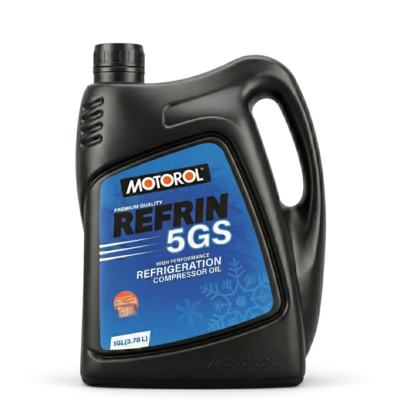
Product details
Product Description
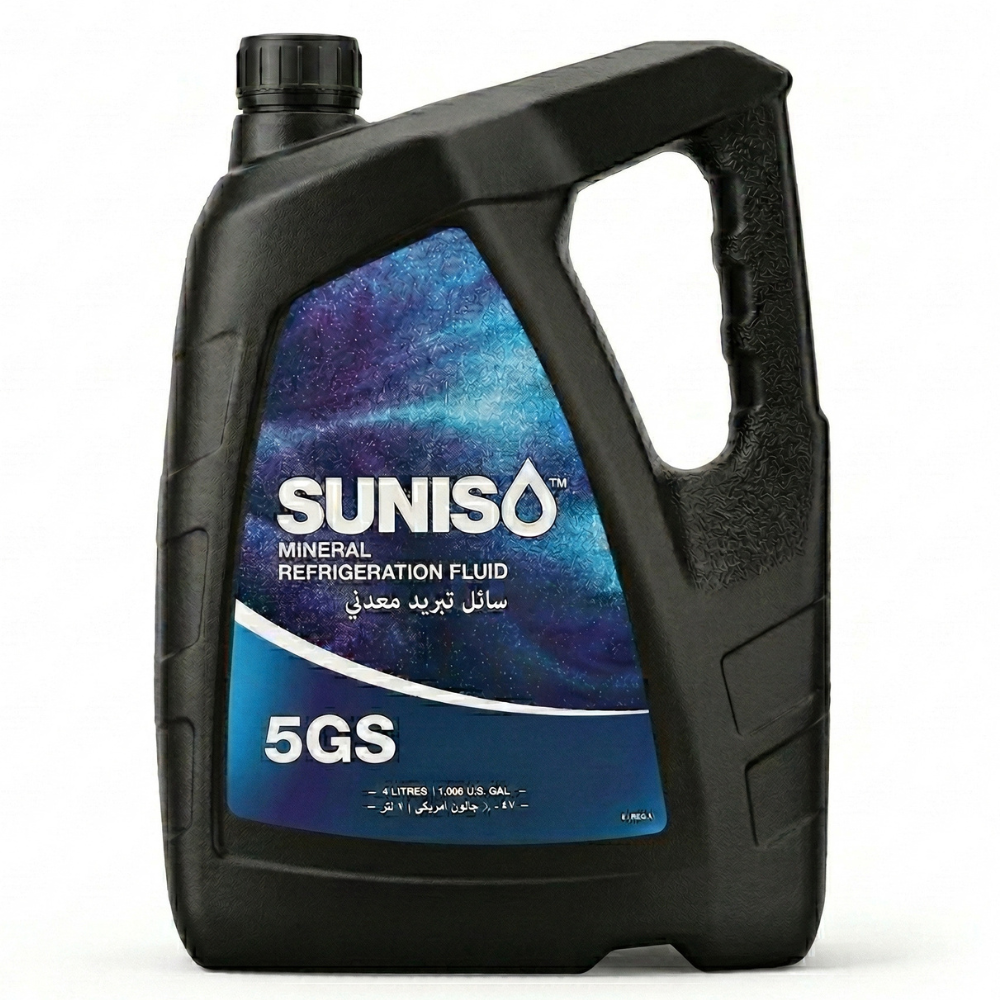
5GS Mineral Refrigeration Oil is a high-performance naphthenic lubricant designed for refrigeration and air conditioning systems using CFC, HCFC, and ammonia refrigerants. It provides excellent lubrication, strong film strength, and reliable protection for compressors operating under heavy-duty conditions.
This highly refined, wax-free mineral oil ensures a low pour point and smooth performance at low temperatures. Its superior dielectric strength makes it suitable for hermetic compressors, while its compatibility with refrigerants like R22 and ammonia ensures stable and efficient system operation.
5GS is ideal for high-load and industrial applications where higher viscosity is required, making it a trusted choice for demanding refrigeration environments.
Key Features
- High-quality naphthenic mineral oil
- Excellent compatibility with R22, ammonia (R717), and hydrocarbons
- Wax-free formulation for low temperature performance
- Low pour point for smooth operation
- High dielectric strength for hermetic compressors
- Strong film strength for heavy-duty applications
Technical Specifications
| Specification | Details |
|---|---|
| Product Name | 5GS |
| Brand | Suniso |
| Type | Mineral (Naphthenic) Refrigeration Oil |
| Viscosity @ 40°C | ~100 cSt |
| Viscosity @ 100°C | ~8.5 cSt |
| Density @ 15°C | ~0.91 kg/L |
| Flash Point | ~200°C |
| Pour Point | ~-24°C |
Applications
- Industrial refrigeration systems
- Refrigeration systems using R22
- Ammonia refrigeration systems (R717)
- Hydrocarbon systems (R290, R600a)
- Reciprocating and rotary compressors
Frequently Asked Questions (FAQs)
Q1: What type of oil is 5GS?
It is a naphthenic mineral refrigeration oil.
Q2: Is it suitable for heavy-duty applications?
Yes, it is designed for high load and industrial systems.
Q3: Which refrigerants are compatible?
It is compatible with R22, ammonia (R717), and hydrocarbon refrigerants.
Q4: What is the difference between 4GS and 5GS?
5GS has higher viscosity, making it suitable for more demanding applications.
Q5: Is it suitable for HFC refrigerants?
No, it is not recommended for HFC refrigerants.