
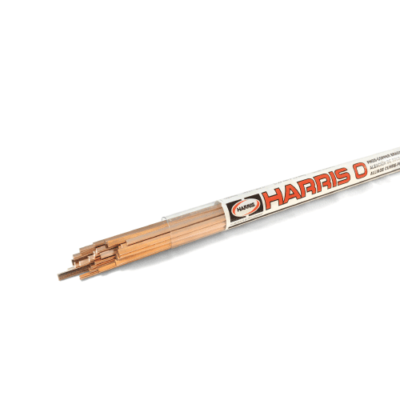
Product details
Ring of Fire Brazing Filler Metal HARRIS
Ring of Fire is based on Stay Silv 15 brazing filler metal and is commonly selected for brazing copper connections, particularly in air conditioning and refrigeration systems. Its wide melting range allows operators to fill loose joints and cap around finished connections, while heating above the liquidus temperature enables the alloy to penetrate tight joints effectively.
The alloy can also be used to braze brass components when suitable brazing flux is applied. It is generally suitable for copper and low nickel copper alloys containing up to approximately 10% nickel.
However, it is not recommended for brazing steel or other ferrous metals because of reduced joint ductility. Phosphorus-containing alloys should also not be used where joints are exposed to sulfur or sulfur compounds during service.
Key Benefits
Ideal for copper brazing in HVAC and refrigeration systems
Wide melting range allows joint filling and capping
Flows into tight joints at higher temperatures
Suitable for brass brazing with proper flux
Provides reliable copper joint performance
Available in multiple product forms for installation flexibility
Specifications
Product Name: Ring of Fire
Product Type: Copper-Phosphorus-Silver Brazing Filler Metal
Suitable Materials: Copper, brass with flux, and low nickel copper alloys
Not Suitable For: Steel and ferrous metals
Corrosion Behavior: Similar to copper base metal, avoid sulfur exposure
Melting Behavior: Wide melting range for joint filling and penetration
Available Forms: Standard wire diameters, strip, preformed rings, and spooled wire
Applications
Air conditioning and refrigeration piping brazing
Copper tubing and HVAC installations
Copper-to-copper joint assembly
Maintenance and service brazing operations
Brass component brazing with flux use
FAQs
Where is Ring of Fire commonly used?
It is widely used in HVAC and refrigeration copper piping installations.
Can it be used on brass components?
Yes, when proper brazing flux is used and overheating is avoided.
Can it be used on steel?
No, it is not recommended for ferrous metals due to reduced joint ductility.
Can it be used where sulfur exposure occurs?
No, phosphorus-containing alloys should not be used in sulfur exposure environments.